
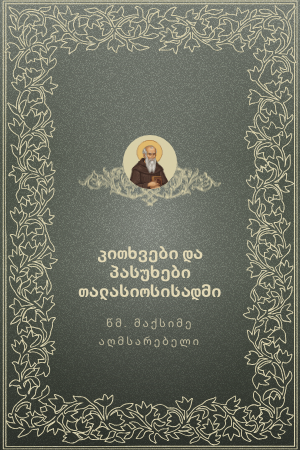
კითხვები და პასუხები თალასიოსისადმი
მაქსიმე აღმსარებელი · 7 საუკუნე
მოკლე პასუხი
“კითხვები და პასუხები თალასიოსისადმი”-ში, მაქსიმე აღმსარებელი გვთავაზობს ღრმა შეხედულებებს ადამიანის ბუნებასა და ვნებებზე. კითხვების სერიის მეშვეობით, იგი იკვლევს, არის თუ არა ვნებები თანდაყოლილი ბოროტება, თუ უბრალოდ ბოროტად გამოყენებული.
წაიკითხე ერთი წიგნი ანგარიშის გარეშე. უფასოდ შედი და განაგრძე კითხვა.
- Dogmatics and Polemics
- სულიერი ბრძოლა
წიგნის შესახებ
| ავტორი | მაქსიმე აღმსარებელი |
|---|---|
| ხანა | 7 საუკუნე |
| თავები | 66 |
| ჩვენს ბიბლიოთეკაში | სრული ტექსტი ინგლისურად და გერმანულად |
| პოდკასტის ეპიზოდი | 6 min |
„კითხვები და პასუხები თალასიოსისადმი“-ში, მაქსიმე აღმსარებელი გვთავაზობს ღრმა შეხედულებებს ადამიანის ბუნებასა და ვნებებზე. კითხვების სერიის მეშვეობით, იგი იკვლევს, არის თუ არა ვნებები თანდაყოლილი ბოროტება, თუ უბრალოდ ბოროტად გამოყენებული. ღრმა თეოლოგიურ კონცეფციებში ჩაღრმავებით, იგი განიხილავს აქტიურ შემოქმედს და კაცობრიობასა და ღმერთს შორის ურთიერთობას. ეს ნაშრომი მოუწოდებს ცხოვრების მორალური გამოწვევებისადმი რეფლექსიას, მკითხველებს ღვთიური რეალობის უფრო ღრმად შესწავლისკენ იწვევს.
სარჩევი
| # | თავი |
|---|---|
| 1 | Questionnaires to Falassius |
| 2 | Maximus Monachus prologue to the scholia placed in the margin |
| 3 | Maximus the monk to Falassius, the most pious presbyter and abbot, concerning various difficult passages of Holy Scripture. |
| 4 | Question 1 |
| 5 | Question 2 |
| 6 | Question 3 |
| 7 | Question 4 |
| 8 | Question 5 |
| 9 | Question 6 |
| 10 | Question 7 |
| 11 | Question 8 |
| 12 | Question 9 |
| 13 | Question 10 |
| 14 | Question 11 |
| 15 | Question 12 |
| 16 | Question 13 |
| 17 | Question 14 |
| 18 | Question 15 |
| 19 | Question 16 |
| 20 | Question 17 |
| 21 | Question 18 |
| 22 | Question 19 |
| 23 | Question 20 |
| 24 | Question 21 |
| 25 | Question 22 |
| 26 | Question 23 |
| 27 | Question 24 |
| 28 | Question 25 |
| 29 | Question 26 |
| 30 | Question 27 |
| 31 | Question 28 |
| 32 | Question 29 |
| 33 | Question 30 |
| 34 | Question 31 |
| 35 | Question 32 |
| 36 | Question 33 |
| 37 | Question 34 |
| 38 | Question 35 |
| 39 | Question 36 |
| 40 | Question 37 |
| 41 | Question 38 |
| 42 | Question 39 |
| 43 | Question 40 |
| 44 | Question 41 |
| 45 | Question 42 |
| 46 | Question 43 |
| 47 | Question 44 |
| 48 | Question 45 |
| 49 | Question 46 |
| 50 | Question 47 |
| 51 | Question 48 |
| 52 | Question 49 |
| 53 | Question 50 |
| 54 | Question 51 |
| 55 | Question 52 |
| 56 | Question 53 |
| 57 | Question 54 |
| 58 | Question 55 |
| 59 | Question 56 |
| 60 | Question 57 |
| 61 | Question 58 [It is said]: “On this rejoice, having now mourned a little, if need be, from various temptations” (1 Pet 1:6). How can he who mourns in temptations rejoice concerning that which he mourns? |
| 62 | Question 59 To this salvation <...> the studies of the prophets, who foretold of the grace appointed unto you, examining to which and at what time the Spirit of Christ who was in them pointed, when He foretold Christ's sufferings and the glory that followed them” (1 Pet 1:10-11). If the blessed prophets themselves, taught by the Holy Spirit, left to us in writing what they had been taught to study and search out, how could they, taught by the Holy Spirit and writing down what was revealed to them, study and search out anything? |
| 63 | Question 60 |
| 64 | Question 61 |
| 65 | Question 62 |
| 66 | Question 64: What is the meaning of the statement of the prophet Jonah, who says of Nineveh, “In it dwell the greatest number of men, not less than two dozen, and they know not their right hand, nor their shuja (Jonah 4:11)? For in the literal interpretation [of this place] I find no comfort. For the prophet does not here speak of children, nor does he mean infants, but he speaks of men. And what man, if his intellect is not corrupted, does not know his right hand and his shuja? Therefore tell me, what men, what right hand and what shuitsa are here spoken of, according to the sense of spiritual interpretation. |
პირველი გვერდიდან
ტექსტის პირველი წინადადებები, როგორც ისინი მკითხველშია.
Prologue of Maximus the Monk to the Scholia placed in the margin Maximus the monk to Falassius, pious presbyter and hegumen, on various difficult passages of the Holy Scriptures. Questions 1. Are the passions evil in themselves, or are they evil because of their abuse? I mean pleasure and sorrow, desire [and] fear, and [all] the [passions] following them. 2.
კითხვები და პასუხები თალასიოსისადმი · პირველი გვერდი
მოსმენა
პოდკასტის ეპიზოდი წიგნზე, 6 min: Evil is a tool held backward.
აუდიოწიგნი და პოდკასტი აპშიგააგრძელე მოსმენა იქიდან, სადაც შეჩერდისხვა ნაშრომები: მაქსიმე აღმსარებელი
 რთულ ადგილებზე (აპორიებზე), 23, ..., 154მაქსიმე აღმსარებელი
 ათი თავი სათნოებისა და მანკიერების შესახებმაქსიმე აღმსარებელი
 ამბიგუა თომას მიმართ სხვადასხვა საკითხებზე წმინდანთა დიონისესა და გრიგოლის შესახებმაქსიმე აღმსარებელი
 ამბიგუა იოანესადმიმაქსიმე აღმსარებელი
 ეპისტოლე თომას მიმართმაქსიმე აღმსარებელი