

Genesis 28:20 Meaning: What the Church Fathers Say
And Jacob vowed a vow, saying, If the Lord God will be with me, and guard me throughout on this journey, on which I am going, and give me bread to eat, and raiment to put on,
Genesis 28:20 · Brenton Septuagint
And Jacob vowed a vow, saying, If God will be with me, and will keep me in this way that I go, and will give me bread to eat, and raiment to put on, KJV
The short answer
Let us reflect on the words of Scripture: he prayed, as it is recorded, by petitioning, saying, “If God be with me, and keep me in this way, into which I go.”
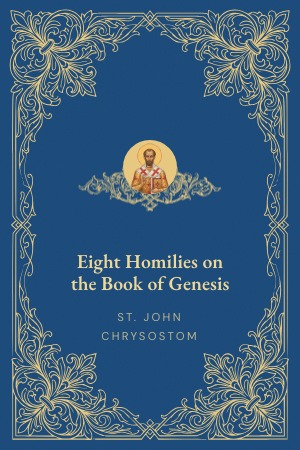
John Chrysostom, 4th century
What the Church Fathers say about Genesis 28:20
4 commentators · all with a free account
 John Chrysostom349 to 407
“The righteous man, prior to hearing these words, prayed similarly, asking, ‘And He shall give me bread to eat, and clothes to put on.’ We should, therefore, refrain from requesting any other temporal goods.”
The whole commentary
Let us reflect on the words of Scripture: he prayed, as it is recorded, by petitioning, saying, “If God be with me, and keep me in this way, into which I go.” The Lord has assured, “I am with thee, and will keep thee in the way in which thou goest,” thus he also responds, “If thou wilt do unto me what thou hast promised.” He then humbly requests: “And the Lord will give me bread to eat and clothes to wear.” Notice that he does not seek wealth or excess, but rather sustenance and garments, clothes to cover his body and bread for essential nourishment. This request highlights the apostolic spirit within him. Such was the righteousness of this man, filled with immense love! What Christ expressed: “Take with you neither gold nor silver, ... nor two garments” (Matthew 10:9, 10), he understood this truth intuitively, even before being taught, desiring from the Lord only “bread to eat and clothes to put on.”
Let us not overlook this, dear friends, but rather aspire to emulate this righteous individual. We, who live in the time of grace, should refrain from seeking worldly possessions from our Lord. He does not require us to plead. Indeed, even if we do not ask, He graciously provides for our needs. “For He commands His sun to rise on the evil and the good, and sends rain on the just and the unjust” (Matthew 5:45). Let us heed His guidance when He teaches, “But seek first the kingdom of God ... and all these things shall be added unto you” (Matthew 6:33). He is ever ready to bestow upon us His blessings, promising to add what we need to our lives. Thus, we should not prioritize material things, but should seek first that which He has commanded, in order to receive the blessings that follow.
In the context of prayer, the Lord has established the guidelines for the matters we should bring before Him, instructing us to say: “Give us this day our daily bread” (Matthew 6:12), that is, the sustenance for the day. The righteous man, prior to hearing these words, prayed similarly, asking, “And He shall give me bread to eat, and clothes to put on.” We should, therefore, refrain from requesting any other temporal goods. It is beneath the dignity of the Almighty, who is so generous and powerful, to ask for items that perish in this life and are subject to change. Such are all earthly possessions, wealth, power, and human acclaim. Instead, let us petition for lasting treasures, things that do not fluctuate or fade.
Recognizing the goodness of our Lord, we should elevate our gaze beyond the present and dedicate ourselves wholeheartedly to heavenly pursuits. If He “commands His sun to rise over the evil and the good, and sends rain on the just and the unjust,” He will not disregard those who turn from evil or seek righteousness, but will cherish them with special care, demonstrating His love in all aspects of their lives.
Beloved, understanding this, let us trust in God's promises and act in accordance with His commandments. In our current actions, we risk being no different from those who lack faith. If He assures us of future blessings, yet we refuse to strive for them and cling to what is immediate, we need not look for further evidence of disbelief when our actions clearly reveal it. Moreover, if He advises us not to seek temporal goods but rather to pursue higher callings, do we then, contrary to His instruction, ask for what He has said not to seek and neglect what He has commanded us to pursue?
Such careless attitudes towards our lives may provoke the gentle and compassionate Lord. We often forget our own actions and wonder about the reasons for His withdrawal amid our trials, failing to consider the severity of our failings, willingly indulging in worldly distractions. Therefore, I urge you, let us prioritize our salvation above all else. “What profit is it to a man if he gains the whole world, but harms his own soul?” (Matthew 16:26). Let us utilize any excess we possess to assist the needy and exhibit wisdom by rejecting vain glory, lowering human pride, and fostering sincere love among one another. This way, we may attain both present and eternal blessings through the grace of our Lord Jesus Christ, who alongside the Father and the Holy Spirit, deserves glory, power, and honor, now and forever, and unto ages of ages. Amen.
 Jerome of Stridon4th century
Nilus of Sinai400 to 430  Philaret of Moscow (Drosdow)19th century
1 / 4
Or in the Bible reader with a free account: read all 4 commentaries.
In our library
Genesis 28:20 in context
28:18And Jacob rose up in the morning, and took the stone he had laid there by his head, and he set it up as a pillar, and poured oil on the top of it.
28:19And he called the name of that place, the House of God; and the name of the city before was Ulam-luz.
28:20And Jacob vowed a vow, saying, If the Lord God will be with me, and guard me throughout on this journey, on which I am going, and give me bread to eat, and raiment to put on,
28:21and bring me back in safety to the house of my father, then shall the Lord be for a God to me.
28:22And this stone, which I have set up for a pillar, shall be to me a house of God; and of all whatsoever thou shalt give me, I will tithe a tenth for thee.
Cross references for Genesis 28:20
- 1 Tim 6:8But having food, and wherewith to be covered, with these we are content.
- 2 Sam 15:8For thy servant vowed a vow when I dwelt at Gedsur in Syria, saying, If the Lord should indeed restore me to Jerusalem, then will I serve the Lord.
- Ps 66:13I will go into thine house with whole-burnt-offerings; I will pay thee my vows,
- Gen 31:13I am God that appeared to thee in the place of God, where thou anointedst a pillar to me, and vowedst to me there a vow; now then arise and depart out of this land, depart into the land of thy nativity, and I will be with thee.
- John 1:16And of his fulness we all have received, and grace for grace.
- Ps 56:12I have hoped in God; I will not be afraid of what man shall do to me.
- Acts 18:18But Paul, when he had stayed yet many days, taking his leave of the brethren, sailed thence into Syria (and with him Priscilla and Aquila), having shorn his head in Cenchrae: for he had a vow.
- Ps 76:11For the inward thought of man shall give thanks to thee: and the memorial of his inward thought shall keep a feast to thee.
Keep reading in Genesis 28
Read Genesis 28 in full · Open in the Bible reader